
For long-stay digital nomads, multi-country eSIM plans are the practical choice for consistent connectivity across various work locations because they eliminate the dread of unexpected roaming charges and the constant hunt for local SIM cards, providing a stable, predictable internet connection that single-country tourist options simply can't match.
The Nomad's Dilemma: Single-Country SIMs Are a Lie
Four years on the road, hopping from Southeast Asia to Europe and back again, has taught me one thing above all else: connectivity is currency. And for long-stay digital nomads, those glossy ads for 'local SIMs for tourists' are a trap, a short-sighted solution that quickly unravels once you're past the initial tourist visa stamp. You're not just visiting, you're living, working, and often, moving on within a few months, and that requires a different approach to data.
My first year, I played the local SIM game. Land in Bangkok, buy a DTAC SIM at Suvarnabhumi, spend an hour registering. Then three months later, heading to Kuala Lumpur, I'd repeat the process. It's a waste of time and mental energy, especially when you're trying to meet a client deadline on arrival. Beyond the airport scramble, consider the implications for critical services. Ever tried to use a Brazilian banking app like Nubank without a local CPF and a local SIM number? Good luck. Many financial services, government portals, and even some ride-sharing apps (looking at you, certain corners of India and their Aadhaar-linked everything) demand a local phone number for verification. This means that even with a robust multi-country eSIM for your primary data, you might still need to maintain a local presence, at least digitally, for specific tasks.

The Hidden Costs of Local SIM Hopping
It's not just the upfront cost, which often includes inflated tourist packages, but the invisible drains on your time and peace of mind. Every new country means researching providers, navigating language barriers, filling out paperwork (sometimes even biometrics, as I found out in Vietnam), and then the inevitable troubleshooting when it doesn't quite work. My WhatsApp groups are full of stories about forgotten top-ups, expired credit, and the sheer frustration of trying to get customer support in a language you barely speak. It adds up, especially when you're trying to keep rent low, like the 250 EUR/month I paid for a studio in Tbilisi's Marjanishvili district, or the $400/month for a decent spot in Chiang Mai's Nimmanhaemin.
The Tyranny of Top-Ups and Expiries
Local SIM cards often come with expiration dates and specific top-up procedures that vary wildly from country to country. You'll find yourself scrambling to find a convenience store or a specific app to recharge, often at the least convenient times. I once lost connection mid-video call in a co-working space in Porto (the lovely Porto i/o, great coffee by the way) because my SIM expired, and their online top-up system was down. That's a lost hour of work, and potentially a missed deadline. The problem is amplified when you're crossing borders frequently, even for short trips, like a weekend hop from Lisbon to Madrid. Each time, you're burning through the remaining data on your current SIM or risking exorbitant roaming fees if you forget to switch it off.
What Makes a Multi-Country eSIM Different for Long Stays?
A multi-country eSIM, unlike its single-destination counterpart, is designed for exactly this kind of fluid, border-crossing lifestyle. Instead of juggling physical cards or buying a new plan every time you cross a border, one eSIM profile can cover dozens, even hundreds, of countries. This isn't just about convenience, it's about predictability and stability, two things that are golden for a nomad.
The key difference lies in the network aggregation. A good multi-country provider partners with multiple local carriers in each supported region, automatically switching you to the strongest available signal. This means that whether I'm in a cafe in Lisbon, like the Fábrica Coffee Roasters in Baixa, or in a remote village in the Central Asia Silk Road, my phone just works. No fiddling with APN settings, no searching for local vendors. It's a single point of data management for my entire journey, which is invaluable when my focus needs to be on work, not connectivity.
Consistent Connectivity: A Nomad's Best Friend
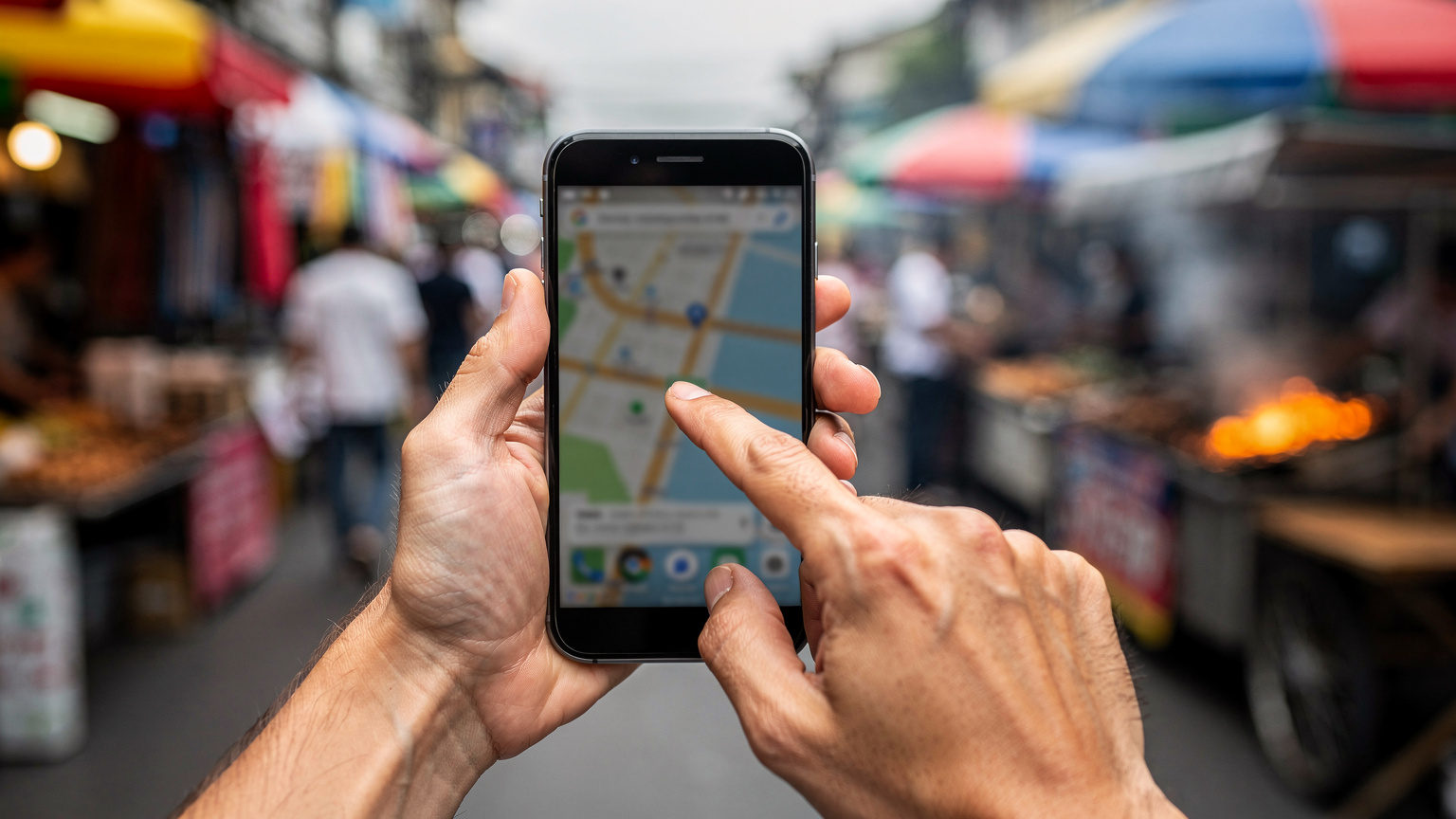
The beauty of a multi-country eSIM for long-term travel isn't just the sheer coverage, but the consistency. You pick a plan, activate it, and it works across borders without you having to do anything beyond turning on data roaming (which, crucially, doesn't incur extra charges because it's built into the plan). This means I can land at a new airport, fire up Google Maps, order a Grab, and check into my Airbnb without a single moment of data anxiety. That smooth transition is worth its weight in gold when you've just done a 12-hour flight. Plus, having a reliable connection means I can immediately tap into apps like Wise for currency exchange or Revolut for banking, both of which work seamlessly with a consistent data connection. This reliability extends to critical applications that often require continuous, stable internet, like video conferencing tools (Zoom, Google Meet) and cloud-based project management platforms. Imagine being mid-pitch and your data drops because you crossed into a new zone without a local SIM. Not ideal.
Predictable Costs: No More Roaming Horror Stories
This is where multi-country eSIMs truly shine for nomads. Traditional roaming charges are notoriously opaque and expensive, a trap I fell into early on when I thought my home SIM's 'international' package would cover me adequately. It didn't. I ended up with a surprise $300 bill after a week in Mexico City, mostly from background app refreshes. With a multi-country eSIM, you buy a package, say 20GB for 90 days across 50 countries, and that's what you get. No surprises. This makes budgeting infinitely easier, which is crucial when you're managing expenses like my current 800 EUR/month studio in Lisbon's Cais do Sodré, plus groceries, co-working space fees, and the occasional Pasteis de Nata.
Evaluating Multi-Country eSIM Providers: Beyond the Marketing
Choosing the right multi-country eSIM isn't about picking the cheapest option. It's about matching a provider's strengths to your nomadic style. Are you sticking to major cities or venturing into more remote areas? Do you need high data volumes for video calls, or is light browsing and messaging enough? The marketing jargon can be overwhelming, so here's what actually matters.
Coverage Maps and Network Partnerships
Don't just look at the number of countries, dig into the actual coverage map. Some providers might list a country but only have patchy coverage in its capital. Always check which local carriers they partner with. For example, if you're frequently in Spain, you'll want a provider that partners with Vodafone, Orange, or Movistar, not just one obscure regional carrier. The more robust the local partnerships, the better your chances of a strong signal, whether you're uploading files from a co-working space in Barcelona or navigating rural Andalusia.
| Provider Feature | Tourist eSIMs | Multi-Country eSIMs for Nomads |
|---|---|---|
| Coverage Extent | Single country or limited regional bundles (e.g., EU only) | Extensive global coverage (100+ countries) |
| Data Validity | 7-30 days, rarely longer | 30-365 days, flexible options |
| Cost Predictability | Can incur high roaming if crossing borders | Fixed cost for defined regions/data amounts |
| Activation Process | Often immediate, but tied to single destination | One-time activation, works seamlessly across borders |
| Network Speed | Variable, often prioritized lower | Typically prioritizes reliable local networks for optimal speed |
Data Allowances and Validity Periods
This is critical. A 10GB plan for 30 days might be fine for a tourist, but for a nomad who's on calls, uploading files, and streaming a bit of Netflix after work, it's not enough. Look for plans with larger data allowances (20GB+, 50GB+) and longer validity periods (90 days, 180 days, or even annual plans). I often find myself needing more data than average because I use my phone as a hotspot for my laptop when co-working spaces like Impact Hub Vienna are packed, or when I'm working from a quieter cafe like Coffee & Kitchen in Budapest.
Customer Support and Troubleshooting
When things go wrong, and they sometimes do, good customer support is invaluable. Look for providers with 24/7 support, preferably via chat or email, as phone support can be tricky across time zones. Check reviews for how quickly and effectively they resolve issues. There's nothing worse than being stuck without data in a foreign country and not being able to reach anyone for help. That's a lesson I learned the hard way in Jordan when my data just stopped working and I had no way to contact my eSIM provider except through a flaky hotel Wi-Fi. (Which, incidentally, was also how I learned that some local carriers need a full 24 hours to 'register' a new eSIM on their network).
Real-World Scenarios Where a Multi-Country eSIM Saves Your Bacon
You might think, "I'll just grab Wi-Fi." And sure, Wi-Fi is everywhere, but it's not always reliable, and certainly not always secure. A multi-country eSIM is your personal safety net, ensuring you're never truly disconnected, especially when it matters most.
Cross-Border Commuting and Weekend Trips
This is the bread and butter of multi-country eSIMs. Living in Europe, it's common to spend a few months in Portugal, then hop over to Italy for a project, or take a weekend trip to Greece. For instance, if I'm based in Lisbon and decide to spend a long weekend exploring Athens, a multi-country eSIM means I don't have to think twice about connectivity. My data simply works the moment I land at Athens International. This is especially useful if you're like me and often use your phone's GPS for navigation through unfamiliar city streets or coordinating meetups with friends. No more scrambling for a local SIM at the airport and missing your bus to the city center, or realizing your existing Cosmote eSIM Greece plan only covers data within Greece, not your transit through other European countries.
Critical Online Banking and Authentications
As mentioned, many financial institutions, especially those that require two-factor authentication (2FA) via SMS, rely on a stable phone number. While a multi-country eSIM won't always give you a local number, it ensures you have the data connection to access banking apps, receive OTPs via WhatsApp, or manage your finances through services like TransferWise or PayPal. Losing access to your funds because you're stuck without data is a nightmare scenario I wouldn't wish on anyone. This also applies to accessing government services or even specific local apps that are essential for long-term residents. For example, in South Korea, many essential services and even public transport apps require stable internet to function correctly, though you'll still need a local ARC for many longer-term financial setups.
Remote Work and Hotspot Reliability
Sometimes, that Airbnb Wi-Fi is just not cutting it, or you're stuck in transit and need to jump on an urgent call. Being able to reliably hotspot from your phone to your laptop is a lifesaver. I've done full client calls tethered to my phone from a train between Budapest and Vienna, and even from a bustling food court in Mexico City (the one in Mercado de San Juan, great tacos) when the cafe Wi-Fi failed. A multi-country eSIM provides that constant, high-speed data backbone, ensuring you can always be productive, regardless of your physical location.
| Scenario | Local SIM Solution | Multi-Country eSIM Solution |
|---|---|---|
| Landing in a new country | Find kiosk, buy SIM, register, activate, troubleshoot. Potential language barrier. | Phone connects automatically, immediate data. No hassle. |
| Weekend trip to neighboring country | Roam (expensive) or buy new local SIM for 2 days (waste of money/time). | Seamless transition, existing data plan works. |
| Urgent work call, poor Wi-Fi | Dependent on existing local SIM's coverage/speed, possibly insufficient. | Reliable hotspot from robust network partners across regions. |
| Banking app 2FA/OTP | Requires local number, potentially difficult if changing SIM often. | Stable data for app-based OTPs, even if no local number is provided by the eSIM. |
Integrating eSIMs into Your Digital Nomad Tech Stack
For someone who lives out of a carry-on, every piece of tech needs to earn its place. eSIMs aren't just a phone feature, they're a foundational part of a streamlined workflow. Think of it as another critical utility, like your VPN or cloud storage, ensuring your digital life stays afloat, wherever you are.
Managing Multiple eSIM Profiles on One Device
Most modern phones support multiple eSIM profiles, allowing you to switch between them with a few taps. This is incredibly useful. I typically keep my primary multi-country eSIM active for all data, and then have a local eSIM (or even a physical SIM) with a local number for specific situations. For instance, in Brazil, you might need a local SIM for food delivery apps like iFood or banking, which are tightly integrated with local phone numbers and CPF/CNPJ verification. When I was in Mexico City, I kept my multi-country eSIM for general data and a cheap Telcel physical SIM for local calls and the occasional WhatsApp verification that somehow wouldn't go through with my international number. Understanding how to use an eSIM for PCs and laptops can also extend this flexibility to your entire mobile office setup.
Pairing Your eSIM with Wi-Fi and VPN Strategies
An eSIM doesn't replace Wi-Fi entirely, but it complements it. Use your eSIM data for secure, sensitive tasks where public Wi-Fi is risky (banking, client communications), and offload to Wi-Fi for heavy downloads or streaming. Always use a VPN, especially on public Wi-Fi, even in a trusted co-working space like Avenida WorkZone in Lisbon. Your eSIM provides the secure pipe, and your VPN encrypts the data within it. It's a two-pronged approach to digital security on the road.
Navigating Local SIM Requirements with a Multi-Country eSIM
This is where the 'no-bullshit' part comes in. A multi-country eSIM is fantastic, but it's not a magic bullet for every single situation, particularly regarding some deeply localized services. You still need to be aware of when a local SIM might be unavoidable.
When a Local Number is Non-Negotiable
Some countries, for example, have strict regulations that tie certain services directly to a local phone number issued by a domestic carrier. I found this to be particularly true in India with its Aadhaar system, where almost everything, from renting an apartment to opening a bank account, is linked to a local mobile number. Similarly, in countries like Brazil, some local banks and digital payment platforms simply won't function with an international number, regardless of your data connection. Here, you'll likely need to procure a cheap local physical SIM or a dedicated local eSIM with an actual phone number, keeping your multi-country eSIM active for general data. This is where dual-SIM phones (physical + eSIM) or phones supporting multiple eSIMs really earn their keep.
Visa Limitations and eSIM Activation
This is a subtle but important point. While your eSIM technically doesn't care about your visa status, the underlying local network providers do. In some countries, you might be required to register your device or SIM card with local authorities after a certain period, which often requires a valid long-term visa or residence permit. For example, in Turkey, if you use a foreign SIM (or eSIM) for more than 120 days, your phone can be blocked from using local networks unless you register it and pay a hefty tax. This is a critical FAQ for many nomads and something to research specific to each country you plan a long stay in. My advice is always to check the local telecom regulations if you're staying longer than 2-3 months.

Cost Analysis: Multi-Country eSIM vs. Local SIMs vs. Roaming
Let's talk money, because for nomads, every dollar (or euro) counts. The perceived cost of a multi-country eSIM can sometimes seem higher upfront than a local SIM, but when you factor in all variables, it often comes out on top for anyone moving frequently.
The True Cost of Local SIMs
Beyond the sticker price, local SIMs come with hidden costs: the time spent acquiring and registering them, the taxi fare to a phone store if the airport kiosks are overpriced, the potential for unused data expiring when you leave, and the mental load of managing multiple accounts. If you're staying somewhere for a full 3 months, a local SIM might be marginally cheaper. But if you're doing shorter stints, say 1-2 months, or frequent border hops, those marginal savings quickly evaporate. Plus, consider the cost of losing connectivity at a critical moment. What's the cost of missing an important client call because you're hunting for a SIM card? Far more than any data plan.
The Insanity of Traditional Roaming
This one is simple: just don't do it. Unless you have a specific, pre-negotiated plan with your home carrier that explicitly states predictable international data rates, traditional roaming will bankrupt you. Those $10/MB charges add up faster than you can say "surprise bill." Even a quick check of emails can easily run into hundreds of dollars. Multi-country eSIMs were born out of the necessity to escape this financial black hole.
| Connectivity Option | Pros for Nomads | Cons for Nomads | Typical Monthly Cost (Estimate) |
|---|---|---|---|
| Multi-Country eSIM | Seamless cross-border, predictable costs, wide coverage, single management point. | May not provide local phone number, perceived higher upfront cost. | $30 - $80 (depending on data/coverage) |
| Local Physical SIM | Local phone number, often cheaper for long, single-country stays. | Time-consuming acquisition/registration, country-locked, data expires on leaving. | $15 - $40 (per country) |
| Traditional Roaming | Uses home number, immediate connectivity upon arrival. | EXTREMELY expensive, unpredictable costs, easy bill shock. | $100 - $1000+ (major risk) |
| Public Wi-Fi Only | Free (in some cases). | Unreliable, insecure, not always available, poor for sensitive tasks. | $0 - $20 (for cafe purchases) |
The Long-Term Value Proposition of eSIMs
When you average it out over a year of travel, a multi-country eSIM almost always provides better value. You're paying for peace of mind, consistency, and the sheer time saved. That time is better spent exploring a new neighborhood, learning a few phrases in the local language, or, you know, actually working. For instance, the time I save not hunting for a SIM in a new city can be spent settling into my Airbnb in Gracia, Barcelona, or finding a local bakery instead of a phone shop.
Troubleshooting Common eSIM Issues on the Road
Even the best tech has its moments. While multi-country eSIMs are generally reliable, knowing how to quickly troubleshoot common issues can save you a lot of grief. I've learned these steps through trial and error, usually in a panic.
Initial Setup and Activation Checklist
Setting up your eSIM is usually straightforward, but rushing it can cause headaches. Here's my go-to checklist:
- Read the Activation Guide Carefully: Every provider has slightly different steps. Don't assume you know it all. Pay attention to QR code scanning vs. manual entry.
- Ensure Stable Wi-Fi During Setup: You need internet to download the eSIM profile. Do this before you leave your home country or while on reliable airport Wi-Fi.
- Check Data Roaming Settings: On your phone, make sure 'Data Roaming' is enabled for your eSIM profile. This is crucial for multi-country plans, as it's how your device switches networks across borders without extra charges.
- Verify APN Settings: Most eSIMs auto-configure APN, but if you have no data, double-check your provider's recommended APN. Sometimes, a quick manual entry is all it takes.
- Restart Your Device: The classic IT solution, but it often works wonders. A fresh network handshake can resolve many connectivity glitches.
Dealing with No Service or Slow Speeds
If you find yourself with no service or painfully slow data, here's what to do:
- Toggle Airplane Mode: Turn on airplane mode for 30 seconds, then turn it off. This forces your phone to re-scan for available networks.
- Manually Select Network: Go to your phone's cellular settings and try to manually select a network from the list. Sometimes your eSIM's preferred network is weak, and another partner carrier has a stronger signal.
- Contact Support: If all else fails, reach out to your eSIM provider's customer support. Have your order number and current location ready. As I mentioned, 24/7 chat support is a lifesaver here.
- Check Data Usage: Make sure you haven't simply run out of data. Many eSIM apps provide real-time usage tracking. This is a common oversight, especially with limited plans.

Planning for the Unpredictable: How to Future-Proof Your Data
As a long-term nomad, you quickly learn that 'expect the unexpected' isn't just a cliché, it's a daily reality. Your data strategy needs to be as resilient as your travel plans. That means thinking beyond your current country and considering the long game.
Always Have a Backup Plan
Never rely on a single point of failure. I always recommend having at least two eSIM profiles on your phone: your primary multi-country one and a cheaper regional or local backup if you're staying somewhere for an extended period. For instance, if you're exploring the US on a summer road trip, you might have a multi-country eSIM for general coverage and then a specific T-Mobile eSIM, perhaps even a free trial if you're considering committing, just for backup. A second physical SIM slot can also hold a local SIM for calls or specific banking needs. Think of it like insurance: you hope you don't need it, but you're glad it's there when you do.
Monitoring Data Usage and Renewing Proactively
Keep a close eye on your data usage. Most eSIM providers offer apps or portals where you can track your consumption. Set reminders to renew your plan a few days before it expires, especially if you're about to cross a border or are in a remote area with limited Wi-Fi. Running out of data mid-journey is a rookie mistake you don't want to make. Proactive management ensures seamless transitions, which is key for maintaining your sanity and productivity on the road.
Staying Informed About New eSIM Tech and Providers
The eSIM landscape is constantly evolving. New providers emerge, coverage areas expand, and data plans become more competitive. Keep an eye on tech blogs, nomad forums, and even your WhatsApp groups for recommendations and updates. What was the best option two years ago might not be today. Staying informed means you can always adapt your strategy to get the best value and most reliable service for your ever-changing travel plans. This proactive approach ensures that your connectivity is always aligned with your dynamic nomadic lifestyle, allowing you to focus on the experiences and work that truly matter.
Frequently Asked Questions
What is the main difference between a multi-country eSIM and a single-country eSIM for digital nomads?
A multi-country eSIM offers seamless data coverage across numerous countries with a single plan, eliminating the need to buy new SIMs or eSIMs for each border crossing. Single-country eSIMs are cheaper for short, stationary trips but create hassle and potential roaming charges for nomads moving frequently.
Will a multi-country eSIM give me a local phone number?
Generally, no. Most multi-country eSIMs provide data services but do not include a local phone number for calls and SMS. For services that strictly require a local number (e.g., some banking apps, local food delivery), you may still need a separate local physical SIM or a dedicated local eSIM that includes a number.
How do multi-country eSIMs prevent unexpected roaming charges?
Multi-country eSIM plans are designed with pre-paid, fixed data allowances that work across all included countries. When you enable data roaming with such a plan, you are using the pre-purchased data at no extra cost, entirely avoiding the exorbitant per-MB charges of traditional carrier roaming.
What should I do if my multi-country eSIM isn't working in a new country?
First, ensure 'Data Roaming' is enabled for your eSIM profile in your phone settings. Try toggling airplane mode on and off. If that doesn't work, manually select a different network operator in your phone's cellular settings. Finally, contact your eSIM provider's customer support for assistance, as there might be a specific APN setting required.
Are there any visa or local regulations that affect multi-country eSIM usage?
While eSIMs don't directly interact with visa requirements, some countries have regulations for long-term foreign SIM usage. For example, some nations may require device registration or specific taxes if a foreign SIM (or eSIM) is used beyond a certain period (e.g., 90-120 days). Always check the specific telecom regulations for any country where you plan an extended stay.
Can I use a multi-country eSIM to hotspot data to my laptop?
Yes, absolutely. Most multi-country eSIM plans allow you to use your phone as a personal hotspot, enabling you to connect your laptop, tablet, or other devices to the internet. This is a critical feature for digital nomads who rely on stable connectivity for remote work, especially when public Wi-Fi is unavailable or unreliable.
Is a multi-country eSIM always cheaper than buying local SIMs?
Not always on a per-GB basis for very long, single-country stays, but it almost always offers better value and significant savings when considering the total cost of time, convenience, and avoiding roaming fees for frequent border-crossers. For nomads who move every 1-3 months, the overall savings and reduced hassle make it the more economical choice in the long run.